Reading Your Tyre
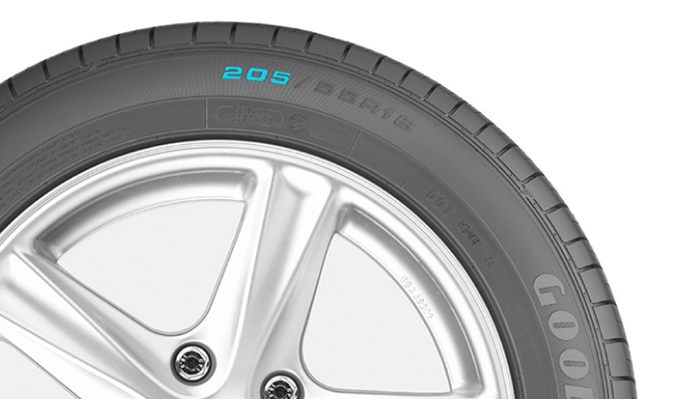
All the important information you need to know about your tyre is printed on the sidewall. Being able to read this information will help you maintain your tyres, and choose new ones when the time comes. Our guide will help you understand all the different numbers and letters and tell you what they mean.
A “P” or no letter at all indicates a passenger car tyre.
The “R” indicates a radial tyre.
This indicates that the tyre conforms to the standards of the United Nations Economic Commission for Europe (U.N.E.C.E.) in relation to pneumatic tyres.
This is the maximum inflation pressure for your tyre, which is important to know when checking tyre pressure. You should consult your vehicle’s manual and tyre placard for more information on recommended inflation pressure.
The letters “TWI” show the location of the tyre’s tread wear indicators. You should check these indicators regularly to ensure the tread is sufficiently deep. The minimum tread depth is in most cases 1.6mm.
The date your tyre was produced is indicated by a four-digit code showing the week and the year.
This is the ratio of the tyre’s cross-section to its width, expressed as a percentage. An aspect ratio of 65, for example, means that the tyre’s height is approximately 65% of its width.
The diameter (height) of the wheels in inches.
Your tyre’s load index tells you its maximum carrying capacity. It’s important to choose a replacement tyre that fits with your manufacturer’s recommendations.
You’ll find the load index of your current tyre on the sidewall, just beside the diameter.
The speed rating indicates the maximum legal speed for a tyre when it is correctly inflated and in use under load.
You’ll find your tyres’ speed rating printed on the sidewall and represented by a letter. A tyre with a speed rating of V, for example, has a maximum speed of 240km/h.
When buying replacement tyres, it is essential to match their speed rating with the speed capabilities of your vehicle.